

“That’s mine!”
“No, I had it first!”
“She’s sitting on my side!”
If you’re raising siblings, you probably don’t need anyone to explain sibling bonding or to discuss sibling t-shirts for kids.
It isn’t always the beautifully coordinated moment we imagine when looking through family photographs.
Sometimes it’s two children laughing uncontrollably at a joke nobody else understands.
Sometimes it’s an older sibling helping a younger one find a missing toy.
And sometimes it’s a disagreement over which child received three more pieces of popcorn when choosing sibling t-shirts for kids.
Sibling relationships are wonderfully complicated.
They contain friendship, competition, protection, annoyance, admiration and a surprising amount of negotiation.
That’s exactly what makes them special, a line of sibling t-shirts for kids.
And while sibling t-shirts for kids certainly can’t manufacture a close relationship, playful matching or connected designs can become one small way of celebrating a bond that’s already growing through hundreds of ordinary moments.
What actually builds a sibling bond?
Sibling bonding rarely happens because parents announce:
“Today, you two are going to bond.”
It develops in much less organized ways.
Sharing the back seat on family trips.
Building something together.
Creating secret games.
Waiting for each other after school.
Arguing over toys and somehow playing together again ten minutes later.
An older child showing a younger one how something works.
A younger sibling copying absolutely everything the older one does.
These repeated experiences gradually become part of a shared childhood.
That distinction matters.
Matching clothes don’t create the relationship.
The relationship gives matching clothes their meaning.
Why do children sometimes love matching their sibling?
Adults often think about matching outfits from a photography perspective.
“They’ll look adorable together.”
Children may see something completely different.
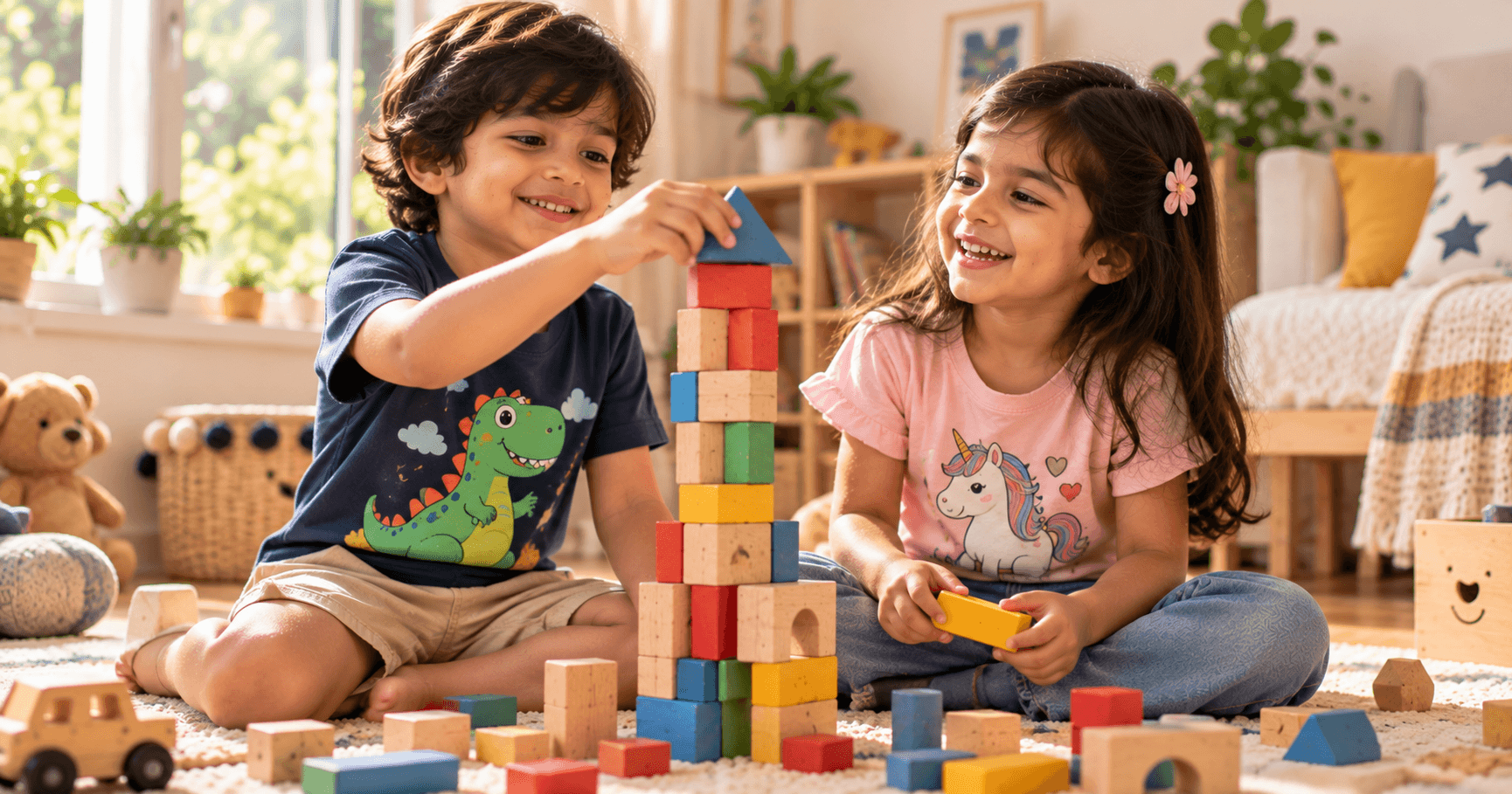
To a five-year-old, wearing something connected to their brother or sister can feel like belonging to the same little team.
“We’re the dinosaur brothers.”
“We’re sisters.”
“We’re on the same team.”
“We both have the funny one!”
Young children naturally create groups and identities during play.
Matching or complementary clothes can simply become another prop in that story.
The fun doesn’t necessarily come from looking identical.
It comes from recognizing the connection.
Matching doesn’t have to mean identical
This is where sibling outfits become much more interesting.
Imagine two children who couldn’t be more different.
One loves dinosaurs.
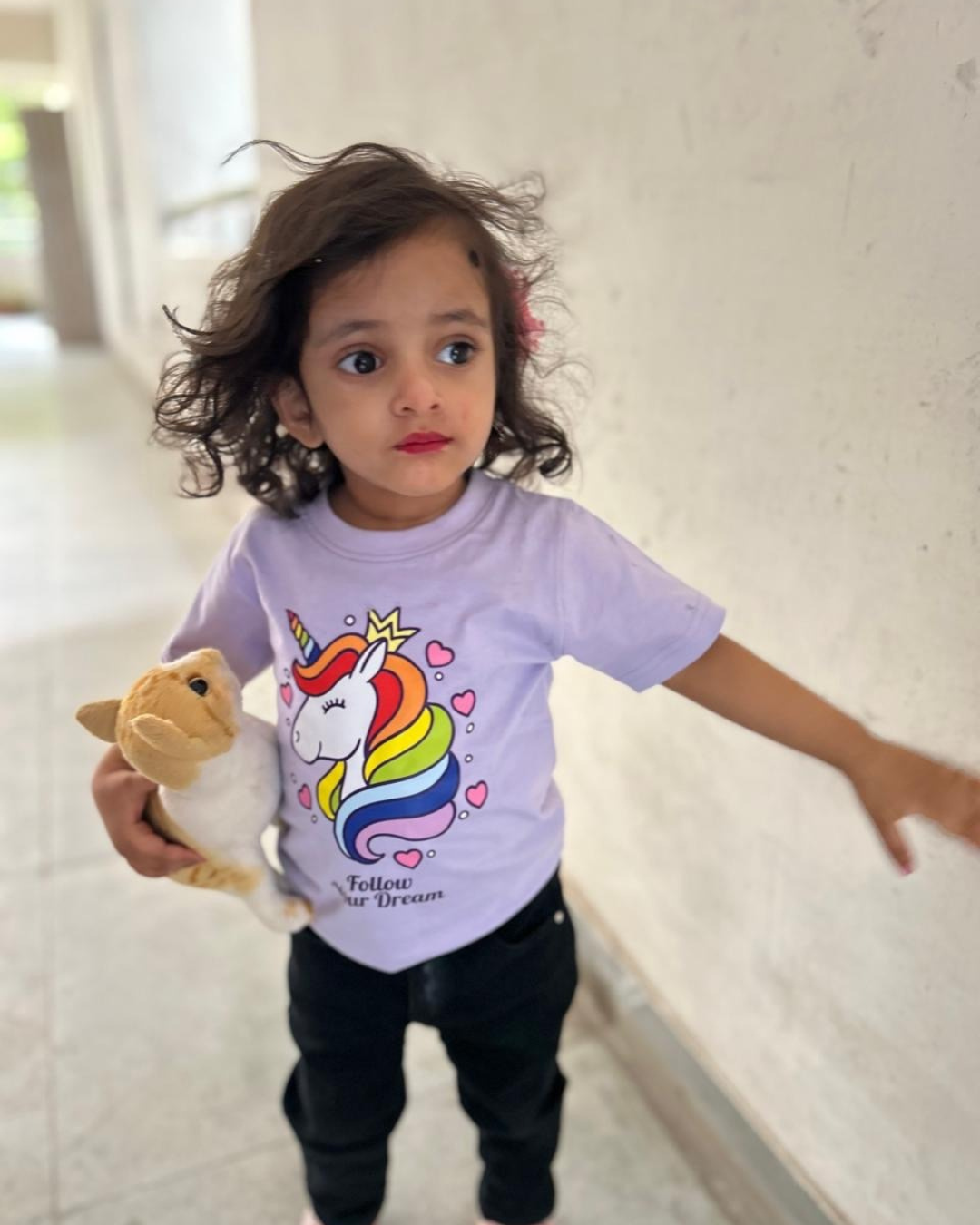
The other wants nothing except unicorns.
Trying to persuade both children to wear exactly the same design may turn a sweet idea into a morning negotiation.
Instead, look for connected rather than identical clothing.
The colors could coordinate.
The illustrations could tell one story.
The shirts might have complementary characters.
Or each sibling could choose a different design from the same theme.
This preserves something important:
their individuality.
Siblings belong to the same family, but they don’t have to become miniature copies of one another.
Let each child choose their part of the pair
Try this before the next family outing or sibling photograph.
Lay out two or three comfortable options.
Then let the children decide.
“Which one would you like?”
“Which one should your brother have?”
“Do you want to match, or choose different ones?”
You may discover that your beautifully planned combination is immediately rejected.
That’s okay.
Children having a say in what they wear can make the experience much more enjoyable.
Charm and Chic’s existing parent guide on why children sometimes refuse clothes explores this idea in more depth: a child’s clothing preference can be connected to comfort, familiarity and self-expression rather than simply being difficult.
A photograph of two children happily wearing slightly mismatched outfits will probably become a better memory than a perfectly coordinated photograph preceded by twenty minutes of arguing.
Everyday matching can be more meaningful than occasion matching
Sibling outfits are often associated with birthdays, festivals and family photos.
Those occasions are lovely.
But some of the most meaningful sibling memories aren’t planned.
Saturday morning pancakes.
A trip to buy ice cream.
Building a blanket fort.
Visiting grandparents.
A lazy afternoon drawing together.
A family road trip.
These are the moments children eventually remember as their childhood.
That’s why sibling-themed clothing doesn’t need to be reserved for a photo shoot.
Comfortable brother-sister t-shirts or complementary sibling designs can work particularly well as everyday clothes because children can actually play in them rather than being repeatedly told:
“Careful! Don’t spoil your outfit.”
For young children, clothes should usually be able to survive the memory they’re being worn for.
The best sibling photos often happen after you stop posing them
Parents know this experience.
You carefully position two children.
“Stand together.”
“Look here.”
“Smile.”
One looks at the camera.
The other looks at the ceiling.
Then somebody decides this is an excellent moment to jump.
Ten minutes later, when nobody is asking for a photograph, they’re sitting together laughing over something ridiculous.
That’s the picture.
If you’re using matching sibling outfits for photographs, let the clothes do the visual coordinating and allow the children to behave naturally.
Try activities instead of poses:
Build a block tower together.
Share a picture book.
Blow bubbles.
Draw each other’s portraits.
Race to a tree.
Bake something with a parent.
Give them something to do together, and photograph the interaction.
You’ll often capture far more personality.
Siblings need individual attention too
Celebrating sibling closeness shouldn’t mean expecting children to always want to be together.
A healthy family rhythm can include shared experiences and individual space.
One child may want to play alone.
Another may have completely different interests.
An older sibling shouldn’t constantly be expected to entertain or care for the younger one simply because they’re older.
Even matching clothes should remain something playful rather than an obligation.
If one child doesn’t want to match that day, the family bond hasn’t suddenly become weaker.
They just don’t want to wear that shirt.
And that’s allowed.
Try a “Sibling Team” afternoon
You don’t need an elaborate activity to create a shared experience.
Give siblings one small mission they can complete together.
For example:
Build the tallest block tower you can.
Make a drawing for Grandma.
Choose five toys to donate.
Create a pretend restaurant.
Build a reading den.
Make fruit skewers with a parent.
Plant something together.
The important word is together.
Don’t worry too much about whether they complete the task perfectly.
They may argue halfway through.
They may change the rules.
The block tower may collapse because somebody “accidentally” kicked it.
That’s sibling life.
The goal isn’t perfect cooperation.
It’s practicing how to share an experience with another person.
Clothing can become part of family storytelling
Children’s wardrobes often contain accidental memory markers.
The dinosaur shirt worn constantly during one summer.
The space t-shirt from the planet phase.
The favorite animal tee that somehow appears in half the family photographs.
Sibling outfits can become similar markers.
Years later, parents may look at a photograph and remember:
“That was when you two were obsessed with building forts.”
Or:
“You wore those shirts everywhere that summer.”
The clothing isn’t what made the memory important.
It simply traveled through the memory with them.
That’s also why choosing everyday pieces children can comfortably move in matters.
Charm and Chic’s comfortable kids clothes guide recommends thinking beyond how an outfit looks initially and considering how it will feel through the running, playing, traveling and unexpected naps that make up a child’s real day.
What should parents look for in sibling t-shirts?
If you’re choosing matching sibling t-shirts, begin with exactly the same things you’d consider for any everyday kidswear.
Comfort before coordination
Matching outfits aren’t much fun if one child wants theirs removed after twenty minutes.
Look for soft fabric, an easy neckline and enough freedom for active play.
Designs both children actually like
Don’t assume siblings share the same interests simply because they share parents.
Connected designs can work better than identical ones.
Easy pairing
T-shirts that work naturally with shorts, jeans or joggers make sibling coordination much easier.
Practicality
Children will spill things.
They’ll sit on floors.
They’ll probably discover mud approximately four minutes after getting dressed.
Choose clothes for actual childhood rather than ideal childhood.
Personality
The nicest sibling combination is often the one that makes sense for those particular children.
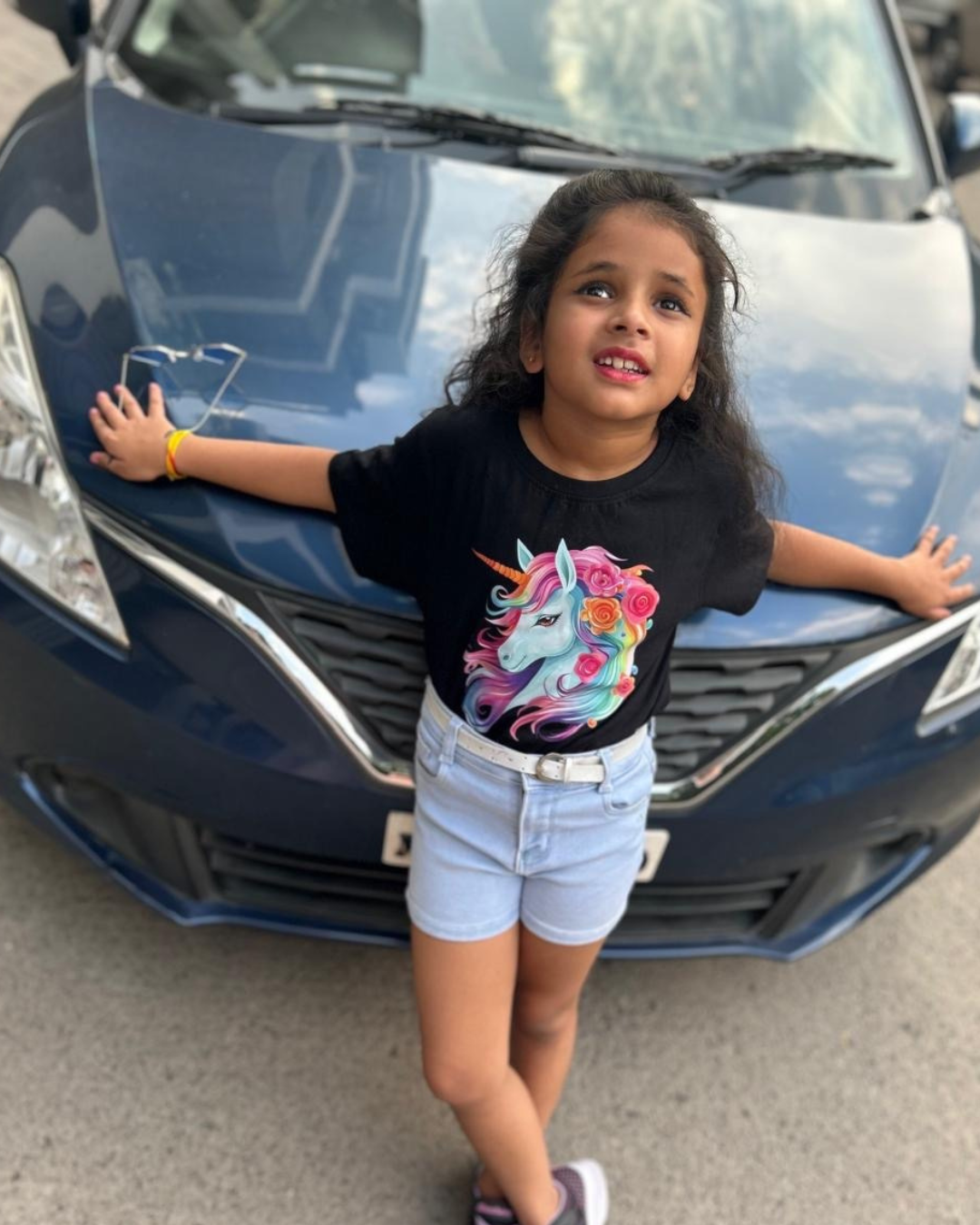
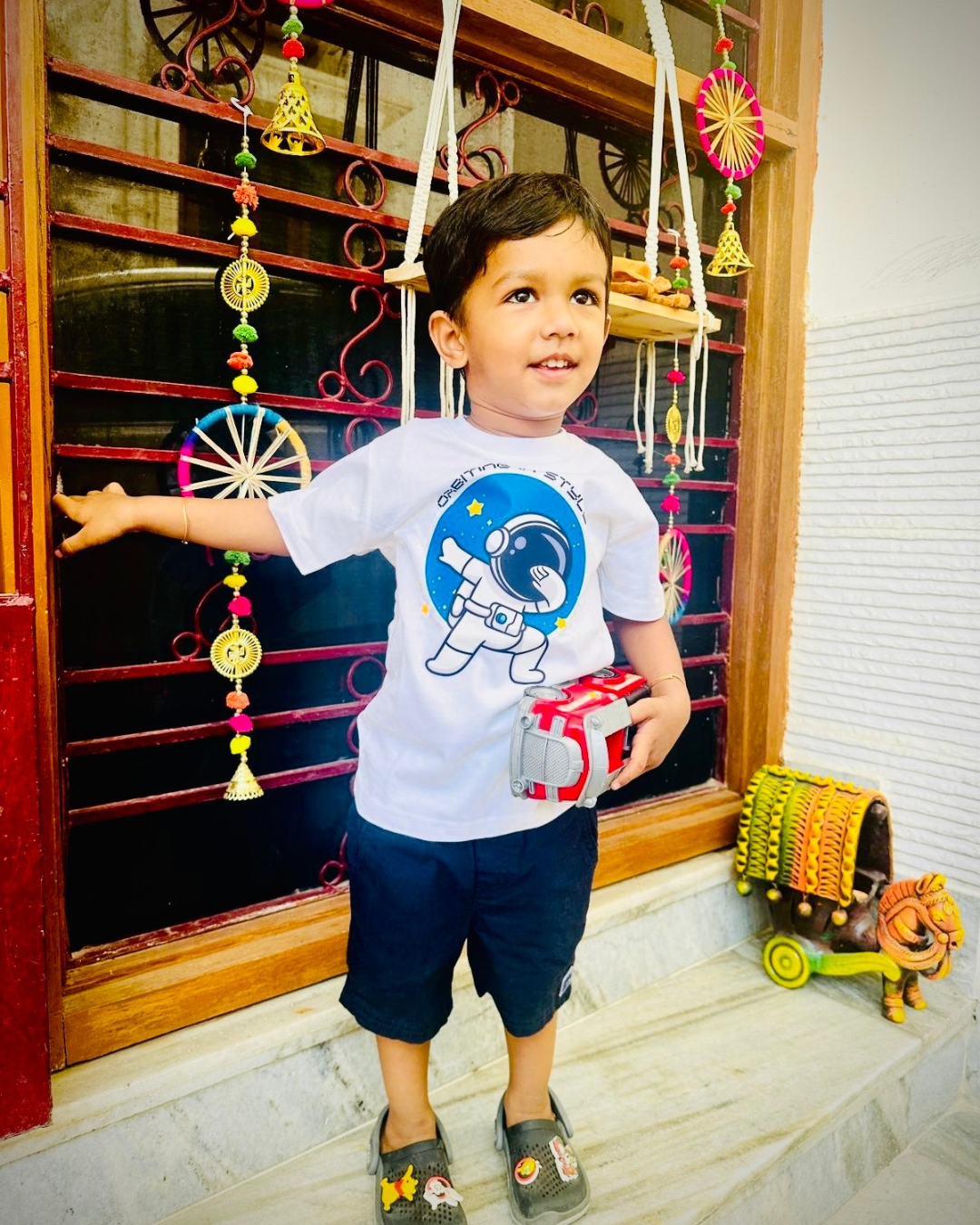
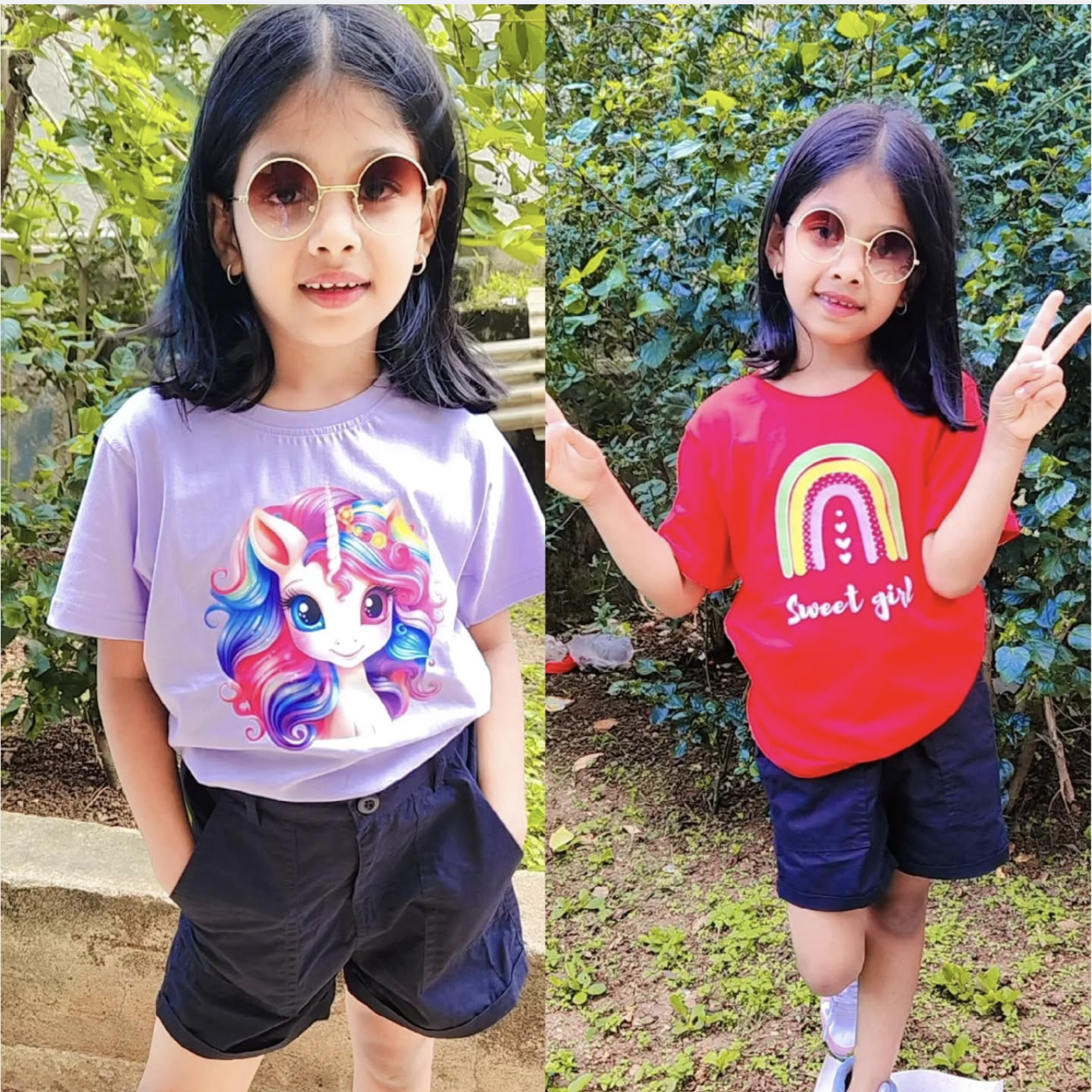
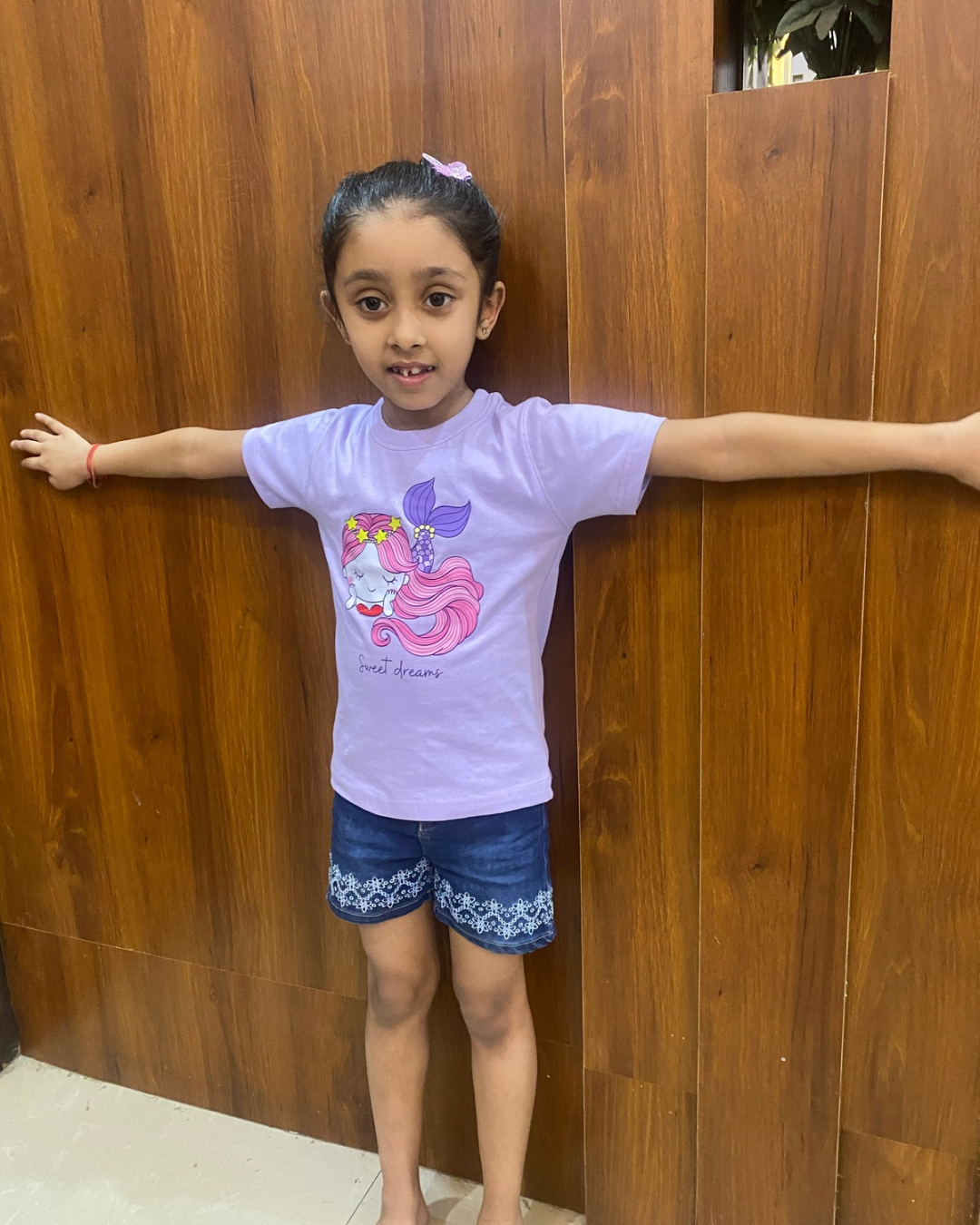
The live Charm and Chic site includes Little Bonds among its collections, alongside themes such as Cartoon, Dino Discovery, Animal Kingdom and Space Explorers.
When the Little Bonds category page is available at its final public URL, link this paragraph directly to that collection.
Don’t compare siblings while celebrating them
There’s one subtle trap worth avoiding.
Sibling-themed moments should celebrate connection without turning into comparison.
“Your sister always smiles nicely.”
“Why can’t you stand still like your brother?”
“Your brother takes better photographs.”
Comments that seem harmless to adults can change the feeling of an activity very quickly.
Instead, notice each child’s contribution separately.
“I love the character you picked.”
“You made your brother laugh.”
“You two came up with a funny idea together.”
Children can belong together without needing to compete for who performs the role of “better sibling.”
A sibling bond doesn’t need to look perfect
Brothers and sisters will disagree.
They’ll want the same toy.
They’ll interrupt each other.
They may insist they are absolutely never speaking again.
Then you’ll find them sharing snacks twenty minutes later.
That doesn’t mean their bond is failing.
It means they’re learning how relationships work.
How to negotiate.
How to apologies.
How to share space.
How to be annoyed with someone and still love them.
Those lessons don’t fit neatly into matching family photographs.
But they’re part of the real story happening behind them.
The photograph we’ll probably treasure later
One day, the matching t-shirts will be too small.
The children’s drawings will become more sophisticated.
Their toys will disappear from the living-room floor.
And the two little people who once argued about who got the blue cup will have much bigger lives of their own.
That’s why sibling memories matter.
Not because every moment needs to be beautiful.
Not because siblings should always get along.
And certainly not because their clothes match.
They matter because two children are growing up beside one another, sharing a chapter of life nobody else will experience in quite the same way.
A sibling t-shirt can be a cute part of that chapter.
But the real Little Bond is everything happening while they’re wearing it.
Related Posts
Ultimate Monster T-Shirts for Kids Who Love Silly Characters
September 18, 2026 Everyday Kids Wear

Ultimate Kids’ Superhero T-Shirts: More Than a Cool Design
September 14, 2026 Everyday Kids Wear

How Animal T-Shirts Boost Kids’ Nature and Imagination
September 12, 2026 Everyday Kids Wear
Leave a Comment